Our Program
Our MS in Applied Psychology program is divided into two tracks, both based on the scientist-practitioner model. In this training model, students engage in rigorous quantitative research in psychology and apply scientific knowledge to problems in organizational settings.
Both tracks require 38 units of coursework, a 300-hour internship, and an independent research thesis. These requirements typically take 2 years of full-time work to complete.
Industrial-Organizational Psychology Track
The Industrial-Organizational Psychology track covers core topics in industrial-organizational psychology, such as job analysis, performance appraisal, selection, training, motivation, leadership, stress, job attitudes, and occupational health.
Quantitative Methods Track
The Quantitative Methods track covers core topics in univariate and multivariate statistics in psychological research, including multilevel modeling. Students to choose electives to further tailor their education to match their specific career interests/goals. Electives outside of psychology that fit with this track include linguistics (programming), big data analytics, or statistics.
We accept both recent graduates and individuals who have been in the workforce for a number of years. Some elements of our program that make us stand out:


Faculty Research Labs
Faculty Research Labs
Both tracks in the MS program have a mentorship match model for thesis requirement. Students work directly with a faculty mentor to complete a research project and assist with other research projects in the laboratory. Before applying to the program, learn more about each faculty member’s focus of research and typical projects by reviewing lab websites and past research publications to see if there is a good match. Be sure to mention how your research interests match specific faculty members in your personal statement. Some helpful advice on choosing a mentor in the quant methods track can be found here.
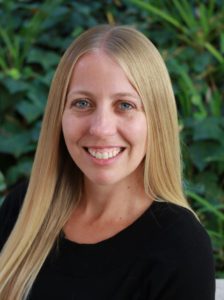
Larissa (Lacie) K. Barber
B.A. University of Missouri, St. Louis; M.S., Ph.D., Saint Louis University.
Research Interests: Connecting well at work means using technology in a way that promotes sustainable work engagement. How can organizations promote effective work connections for productivity and disconnection to maintain well-being? This lab conducts research on evidence-based solutions for tackling problems with “always on” workplace practices that increase worker stress and burnout given the 24/7 nature of e-work communications. Alternatively, “optimally on” workplace practices allow employees to maximize both their effectiveness at work and well-being. Typical lab topics include examining issues surrounding work engagement, work inclusion, work recovery, and work-life balance among teleworkers. This lab also explores effective organizational, leadership, and workgroup practices for creating positive telework experiences.
Lab: ConnectWell @ Work Lab, Currently accepting new MS students

Jeffrey M. Conte
B.A., University of Virginia; M.S., Ph.D., Pennsylvania State University.
Research Interests: Personnel assessment & selection, personality, psychological testing & measurement, stress, type A behavior pattern, temporal issues, time management, safety factors at work
Lab: Personality Measurement Lab, Currently accepting new students
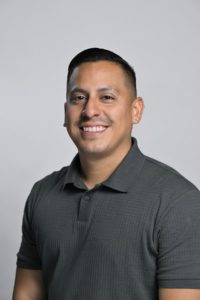
Wiston A. Rodriguez
B.A., San Diego State University; M.S., California State University, Long Beach; Ph.D., The Graduate Center & Baruch College, City University of New York (CUNY)
Research Interests: My research focuses on topics within occupational health psychology such as workplace mistreatment, illegitimate tasks, and the work-nonwork interface. I’m also interested in topics related to diversity, equity, and inclusion, specifically looking at the unique experiences of minorities (e.g., LGBTQ+ employees) and how those experiences impact work and nonwork outcomes.
Lab: Wellness and Representation (WAR) Lab, Currently accepting new students
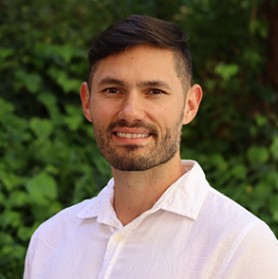
Jon Helm
B.S., M.S., Ph.D., University of California, Davis.
Research Interests: Develops and refines statistical models that (1) measure psychological constructs, and (2) analyze longitudinal data. Uses both frequentist and Bayesian approaches to estimate novel multilevel and structural equation models designed to either separate psychological constructs from a variety of method effects, or summarize how psychological constructs unfold over time.
Lab: STATs Lab (Statistical Techniques Applied to Social Science lab), Currently accepting new students
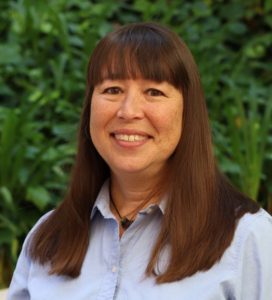
Lisa M. Kath
B.S. University of California, Berkeley; M.A., Ph.D., University of Connecticut
Research Interests: My research interests always center on worker well-being, most often in the areas of safety and stress. Most often, I have been studying the well-being of healthcare workers, with a recent focus on their experiences of patient aggression.
Lab: POWER Lab, Currently accepting new students
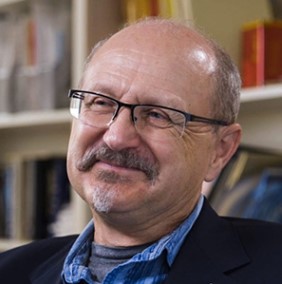
Georg (Jörg) Matt
Dipl. Psych., Albert-Ludwigs-Universitat, Freiburg, Germany; Ph.D., Northwestern University
Research Interests: Tobacco smoke pollution and exposure, secondhand smoke, thirdhand smoke, tobacco control policies; quantitative research methods, quasi-experimentation, field research, evaluation research, meta-analysis, generalizability; measurement, fuzzy set theory, cognitive models of self-reports, fuzzy set models of magnitude estimates.
Lab: Measurement and Evaluation Research Group (MERG), Currently accepting new students

Scott C. Roesch
B.S., University of California, Davis; M.A., California State University, Long Beach; Ph.D., University of Nebraska, Lincoln.
Research Interests: Trait-state models of stress and coping; coping with physical illness, and particularly cancer; cultural, ethnic, and acculturation differences in stress and coping; cross-ethnic measurement equivalence; structural equation modeling, meta-analysis.
Lab: Stress and Coping, Not currently accepting new students